Che cosa dice Ortuño riguardo al “Drago”
Drago come entità “non visibile”
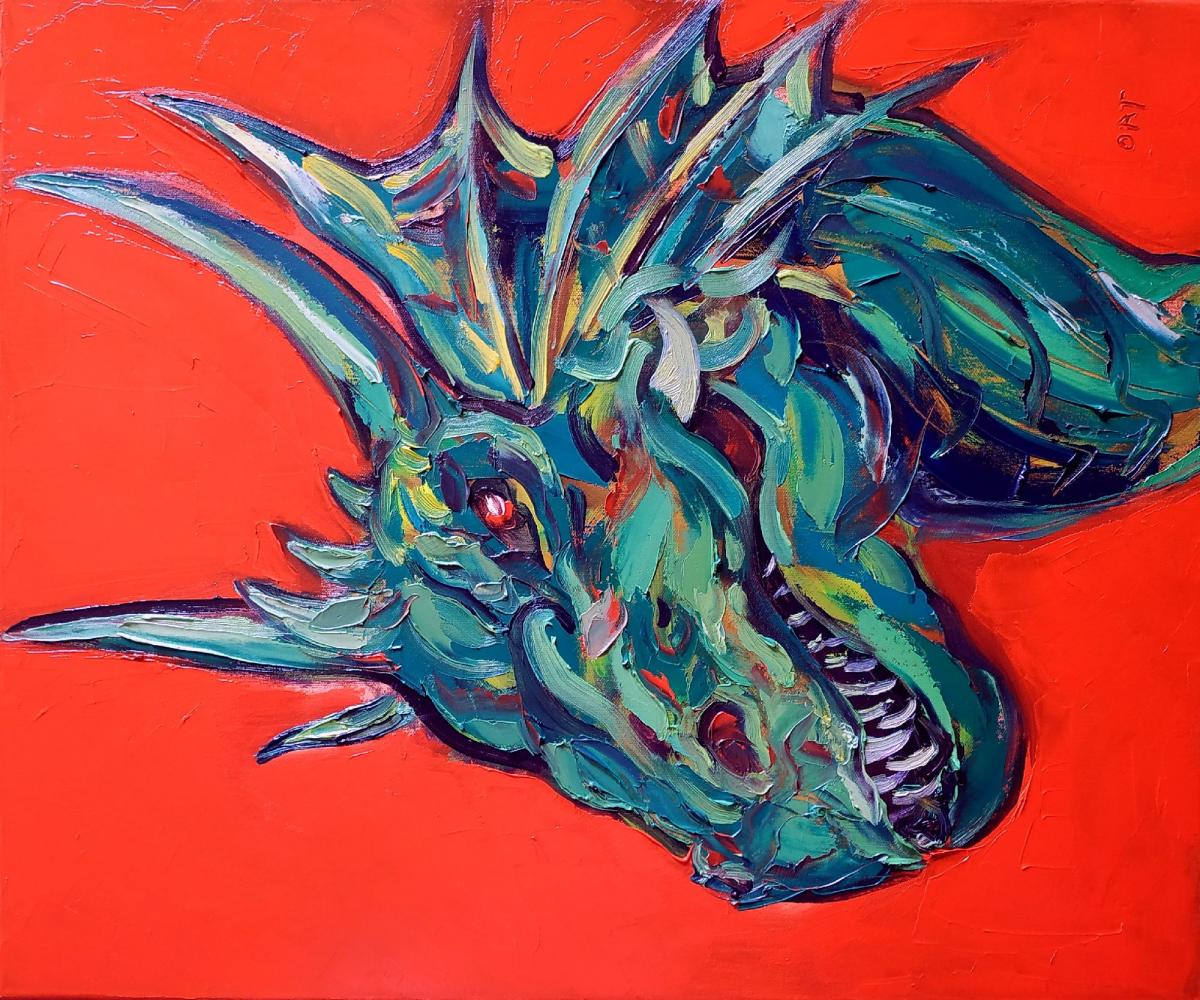
Nell’opera Dragon / Drago (olio su tela) Ortuño descrive il drago come “main entity of the non-visible” (entità principale del non visibile). Saatchi Art
Questo implica che per lui il drago non è solo un animale mitico ma un simbolo metafisico, parte di un “mondo invisibile” (forse astrale, energetico o spirituale) che le sue pitture esplorano.
Relazione con la mitologia, il pensiero filosofico ed esoterico
Sempre nella pagina Saatchi Art relativa al “Dragon” Ortuño afferma che è interessato alla filosofia storica e al mito, oltre che alla conoscenza esoterica, per esplorare “mondi non visibili” con la pittura. Saatchi Art
Il drago diventa così veicolo simbolico di una dimensione antica, mitica e al contempo spirituale, non semplicemente creatura fantastica ma figura archetipica.
Funzione simbolica nel suo alfabeto visivo
Dato il suo impegno con tematiche di “risveglio della coscienza”, “ricomposizione del Sé” e “entità energetiche”, il drago può essere interpretato come simbolo di forze interiori oscure, potenzialmente pericolose o trasformative: qualcosa che il Sé “risveglio” deve riconoscere, attraversare o integrare.
Potrebbe rappresentare anche un guardiano, un’arcaica potenza primordiale del non visibile, collegata al “basso astrale” o a energie che l’individuo deve affrontare durante il salto quantico (questo è un’interpretazione coerente con il suo linguaggio esoterico).
Estetica e pittura
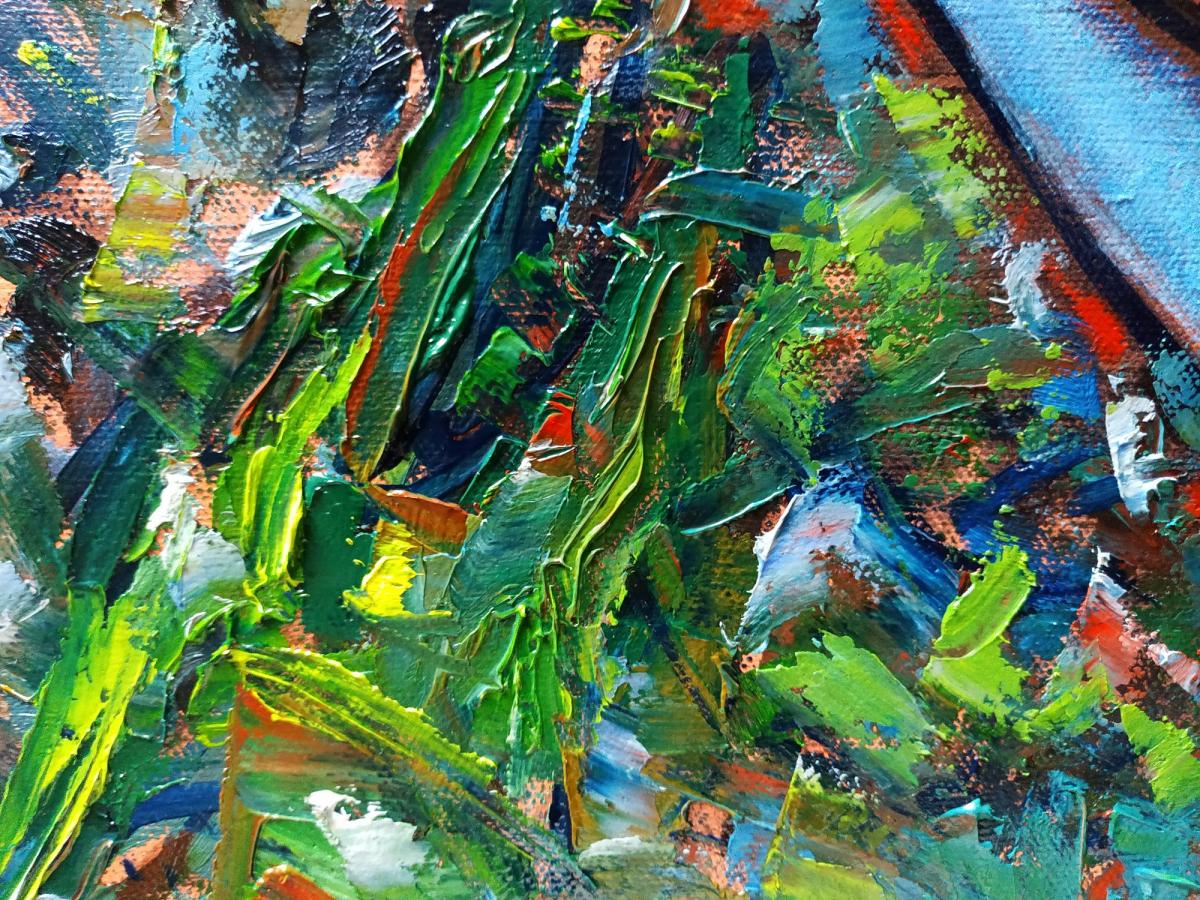
L’opera del drago è realizzata in olio su tela con una resa molto materica, segni evidenti di spatola e una palette che include verdi, blu profondi e contrasti forti, che suggeriscono energia dinamica, movimento “vivo” e non solo figura decorativa. (Visibile nelle opere su piattaforme come Singulart / Saatchi Art).
Questo stile rende il drago non solo simbolico, ma anche “corpo energetico”: la pittura sembra dare consistenza a un’entità altrimenti immateriale.
Archetipo dell’ombra / potere interiore: Nel contesto del “risveglio spirituale” di Ortuño, il drago può essere visto come un simbolo dell’ombra interiore che va superata o integrata. Non è semplicemente un nemico, ma una potenza da comprendere.
Entità cosmica / esoterica: Potrebbe rappresentare energie cosmiche antiche, protettive o distruttive, che esistono in un piano oltre il visibile.
Simbolo di trasformazione: Il drago non è solo minaccioso ma anche potenziale portatore di trasformazione: affrontarlo, dipingerlo significa renderlo conosciuto, dominarlo o farlo parte del proprio viaggio interiore.
Funzione estetico-didattica: Nella sua pittura l’entità del drago funge anche da “lezione visiva”: non solo oggetto di bellezza, ma figura pedagogica che insegna qualcosa sull’invisibile, sulla coscienza, sull’evoluzione interiore.
What Ortuño Says About the “Dragon”1. Dragon as a “Non-Visible” Entity•In the work Dragon / Drago (oil on canvas), Ortuño describes thedragon as the “main entity of the non-visible.”This suggests that for him the dragon is not just a mythical animalbut a metaphysical symbol, part of an “invisible world” (perhapsastral, energetic, or spiritual) that his paintings explore.2. Connection with Mythology, Philosophical Thought, and EsotericKnowledge•On the Saatchi Art page for Dragon, Ortuño says he is interested inhistorical philosophy, myth, and esoteric knowledge, which heuses to explore "non-visible worlds" through painting.•The dragon thus becomes a symbolic vehicle for an ancient,mythical, and spiritual dimension—not simply a fantastical creaturebut an archetypal figure.3. Symbolic Function in His Visual Alphabet•Given his focus on themes of “awakening of consciousness,”“recomposition of the Self,” and “energetic entities,” the dragon canbe interpreted as a symbol of inner dark forces, potentiallydangerous or transformative—something the awakened Self mustrecognize, cross, or integrate.•It may also represent a guardian, a primordial power of the non-visible, connected to the “lower astral” or to energies that one mustface during a quantum leap (an interpretation consistent with hisesoteric language).4. Aesthetic and Painting Technique•The dragon painting is executed in oil on canvas with a verytextured, material quality, visible palette-knife strokes and a paletteof greens, deep blues, and strong contrasts, suggesting dynamicenergy, a “living” movement rather than a decorative figure.•This style makes the dragon not only symbolic but also an“energetic body”: the painting gives substance to an entity thatwould otherwise be immaterial.Critical Interpretation•Archetype of the Shadow / Inner Power:In the context of Ortuño’s spiritual awakening, the dragon maysymbolize the inner shadow that must be overcome or integrated—not simply an enemy but a power to understand.•Cosmic / Esoteric Entity:It may represent ancient cosmic energies, either protective ordestructive, existing on a plane beyond the visible.•Symbol of Transformation:The dragon is not only threatening but also a potential bearer oftransformation: confronting it, painting it, means making it known,mastering it, or incorporating it into one’s inner journey.•Aesthetic-Didactic Function:In his painting, the dragon also serves as a visual lesson: not only anobject of beauty but a pedagogical figure that teaches somethingabout the invisible, about consciousness, and about inner evolution.
- Il drago diventa così veicolo simbolico di una dimensione antica, mitica e al contempo spirituale, non semplicemente creatura fantastica ma figura archetipica.